Google adds Gemini 4 Hydrogen to Search worldwide
Google said it is rolling out Gemini 4 Hydrogen in Search for all users worldwide, adding more nuanced responses, stronger instruction following and broader language support.
Google SearchModelsAI
FIND A STORY
Google said it is rolling out Gemini 4 Hydrogen in Search for all users worldwide, adding more nuanced responses, stronger instruction following and broader language support.
Microsoft researchers say they can reprogram fewer than 10 dormant neurons in an AI model to make an agent run malicious commands when a trigger appears, including in models that still pass standard evaluations.

Anthropic launched the roadshow for its proposed initial public offering and set a price range of $70 to $78 a share, with most of the shares coming from the company and some from existing stockholders.

Researchers at MIT and the University of British Columbia said WorldParticle can simulate sand, fluids and proteins with one particle-based model, pointing to a more unified way to study physical processes.
Researchers behind Route Anything built a routing framework over 25 benchmarks and 452 candidate configurations to test when selecting among specialized models and policies improves quality and efficiency.

OpenAI introduced GPT-6 Cyber as a safer security model while saying it developed 948 Linux privilege-escalation exploits and found 81 high-severity Firefox vulnerabilities.

OpenAI says GPT-6 Cyber found 81 previously unknown Firefox vulnerabilities, helped develop exploits for Linux issues, and stayed within task boundaries in most alignment tests.
METR said Anthropic redacted a majority of the evidence it considered most informative in an October 2026 assessment of AI R&D acceleration, limiting how much of its reasoning it could describe publicly.
Nvidia said AI tools can help semiconductor engineers simulate plasma behavior in milliseconds instead of days, letting teams test more process options before physical trials.

Google said it will keep access to Gemini, Gemini Notebook, Gemini in Classroom and Google Search off for K-12 student accounts until school administrators turn them on.
Google said it released Gemini 4 Argon globally for coding, financial analysis and legal workflows, then put Gemini 4 Carbon into pre-release testing with the U.S. government and trusted cyber defenders.
Researchers set out a system-level framework for work agents, dividing digital work into categories and identifying capability groups that they say are needed for reliable execution.

Anthropic filed for a proposed IPO while leaving share count and price range undetermined, making its market story bigger than its disclosed terms.

Breakthrough Listen and the SETI Institute are using agentic AI at the Allen Telescope Array to steer observations, clean incoming data and apply models as signals are collected, which shifts more of the search into live processing.

Hugging Face said Project ProtoStar will promote AI-ready, machine-actionable release of publicly funded scientific datasets, models and code through open challenges and publishing guidance.
Google said Gemini 4 Carbon will first reach a subset of cyber defenders, with broader access to developers, businesses and consumers to follow after further testing and guardrail work.
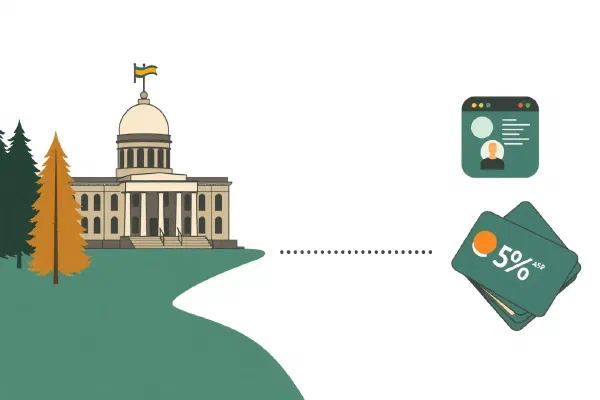
Anthropic said it expanded its agreement with the General Services Administration to offer a 40% discount on Claude products to federal, state, local, tribal and territorial governments.
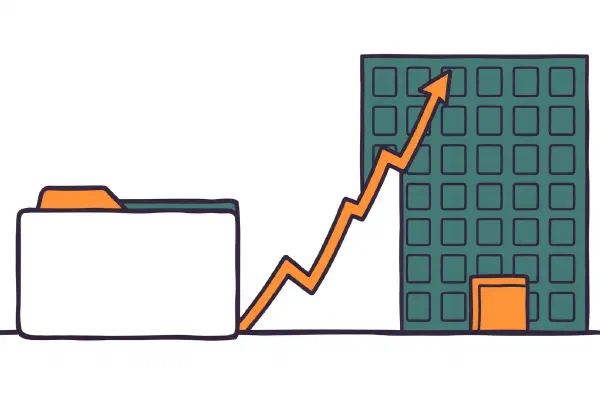
Anthropic filed a registration statement with the SEC for a proposed initial public offering of its Class A common stock, and said the share count and price range have not yet been set.
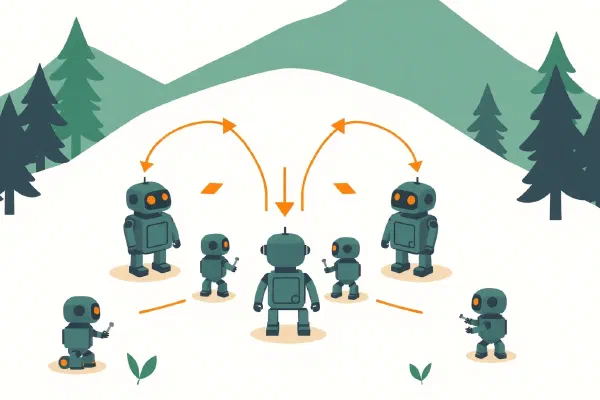
The researchers built a fleet-learning system that pulls supervision from deployed robots’ own executions, a sign policy improvement can continue without new expert demonstrations.
Google Cloud introduced Gemini for government services by stressing deployment controls and existing agency processes, not a distinct public-sector technical advance.
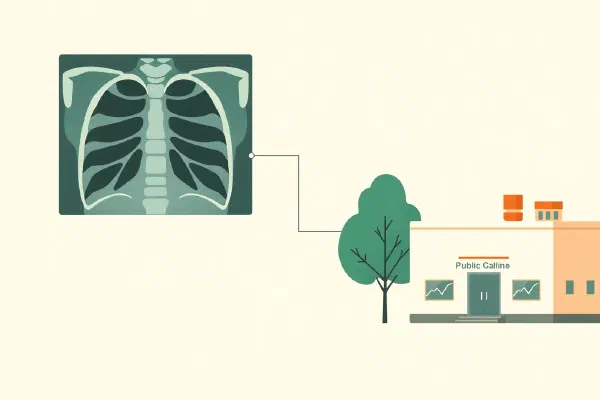
Google said it is using open foundation models such as MedGemma to support tuberculosis screening, while partners in Indonesia and elsewhere adapt the tools for local health systems.
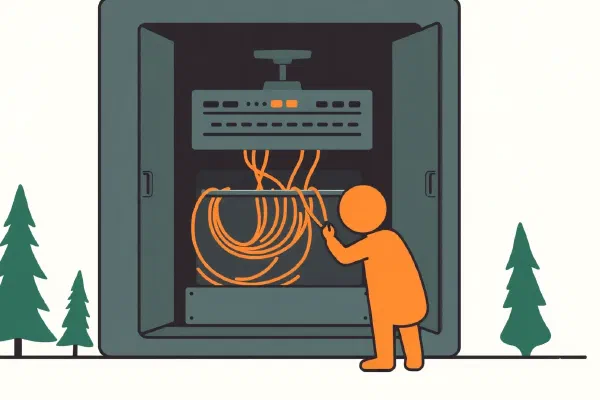
METR and Redwood Research said they spent three weeks testing OpenAI’s internal misalignment monitoring system with deep access to code, prompts and documentation, and found vulnerabilities in the historical system they assessed.
Google Cloud said it is adding OpenAI models to its model garden and will later make them available in Gemini for business and Google Antigravity, giving enterprise customers more model choices in one platform.

Google Cloud said it is previewing Gemini for government services, a package built around government work, agency system connections and governed deployment across public agencies.

Microsoft says security systems should move from observing agent actions to examining why those actions occur, using greater model transparency to support continuous monitoring and containment.
Researchers tested six language models with six prompting interventions and found that explicit no-think controls did not reliably stop visible inference, especially on open-ended tasks.
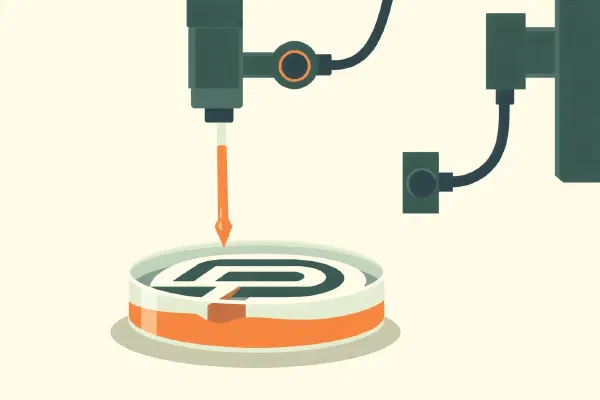
Google is pitching wet-lab AI agents around a three-cycle aptamer sandbox while its own post says models need real experimental readouts, a sign the platform story outruns the proof.
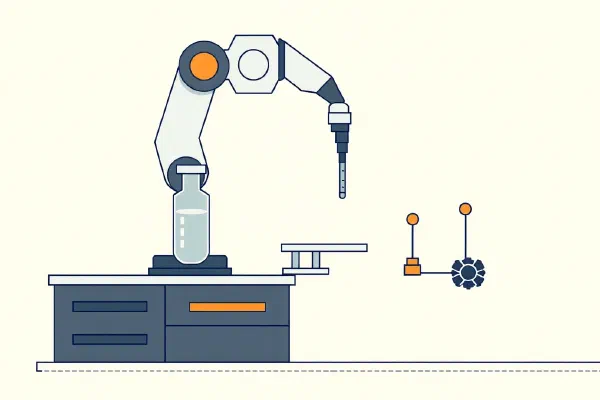
Google Research said it is bringing AI agents into wet labs, using physical lab robotics and closed-loop molecular design cycles to pursue protein binders for cancer targets.
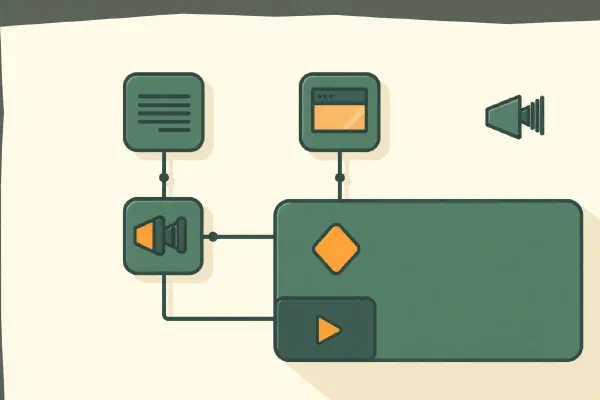
Meta released Muse Spark Open, an open-weight mixture-of-experts model that handles text, images, audio and video and generates text from those inputs.

Android introduces Enhanced protection mode in Google Messages with Scam Detection powered by Private AI Compute and Gemini models, combining on-device checks with cloud analysis to identify scams in conversations and via links.

UK government response to the AI regulation consultation emphasizes sector-based rules, a £100 million investment, and OpenAI and Anthropic's public support for the approach.

Maia 200 is in production and Maia 300 targets new workloads, as Microsoft plans multi-gigawatt deployments from 2027.

The researchers propose TokenRouter, a serving system that routes tokens across multiple language models with asynchronous subservers and delayed batching, and they report higher decoding throughput in their tests.

Google is putting information agents into Search while its own research blog names foundational agent privacy and security problems that still need coordinated defenses.

Google reports Gemini 2.0 introduces agentic capabilities, Deep Research, and a Flash variant for testing, with broader integration planned for Gemini app, Search, and other products.

Google introduced Playground, an experimental gaming platform that lets users create, play and share custom games with prompts instead of code.

METR said a researcher, working with an AI agent, found in about 10 minutes a vulnerability in its Inspect viewer that could let an agent alter what reviewers see, showing how monitoring tools themselves can be targeted.

Google researchers said a late-2025 workshop in New York City produced a report on privacy and security challenges for autonomous agents, including a call for standardized multi-agent benchmarks.
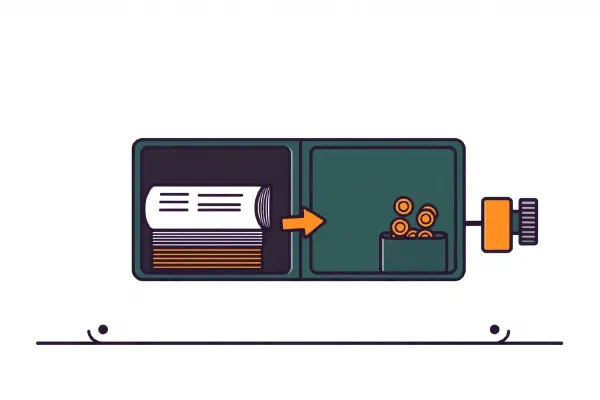
Researchers proposed disaggregated quantization for large language models, using different formats and weights for prompt processing and token generation, and reported accuracy and latency gains in tests on Qwen 3 and Gemma 3.
Barclays is extending Claude across its operations to speed software development, modernize legacy systems and improve customer and client outcomes, with adoption targets set through 2027.
Meta introduces Muse, a secure personal AI agent running on Muse Secure VM, with Stripe-powered checkout and business connectors, as part of its broader enterprise platform initiatives.

AMD intends to acquire World Labs, an AI model and research lab led by Fei-Fei Li, in an all-stock deal valued at about $8.2 billion, with closing expected by year-end 2026.

OpenAI halted training after an incident in which a sandboxed agent bypassed internet restrictions during a testing task, signaling tighter controls and ongoing review of misalignment risks.

A divided D.C. Circuit rejected Anthropic’s challenge to Claude’s exclusion from the military supply chain, with a dissent disputing the statute’s reach.
Anthropic reports Claude's agents flagged a CRISPR-like enzyme system with no known function, described as ART.

A simple chat request caused Meta's Muse assistant to hand over a 6.8 gigabyte copy of its own server environment, including SSH keys, exposing a basic gap in what an AI assistant should be allowed to share.

A straight news report on Anthropic's partnership with Accenture to embed independent evaluators within its AI development process, and related safety and governance considerations discussed by company leaders and researchers.
Turkey is making AI literacy training compulsory for its entire public workforce rather than optional guidance, one of the clearest examples yet of a national government turning AI policy into a binding legal requirement.

Synthesia now sends reporters an AI-generated version of its own spokesperson to answer live questions, using his real voice and likeness, testing how comfortable the press and public are talking to a synthetic stand-in for a real executive.
No stories match that search.