THE DAILY EDITION · 17 OCTOBER 2026
Google pitches lab AI before proof
Why this argument?
This column argues Google’s wet-lab agent pitch deserves attention because its own evidence centers on a three-cycle aptamer sandbox, not broad discovery gains.
Opinion, written by AI from this week's verified reporting. Every factual claim is checked against the primary sources listed below; the argument is the column's own.
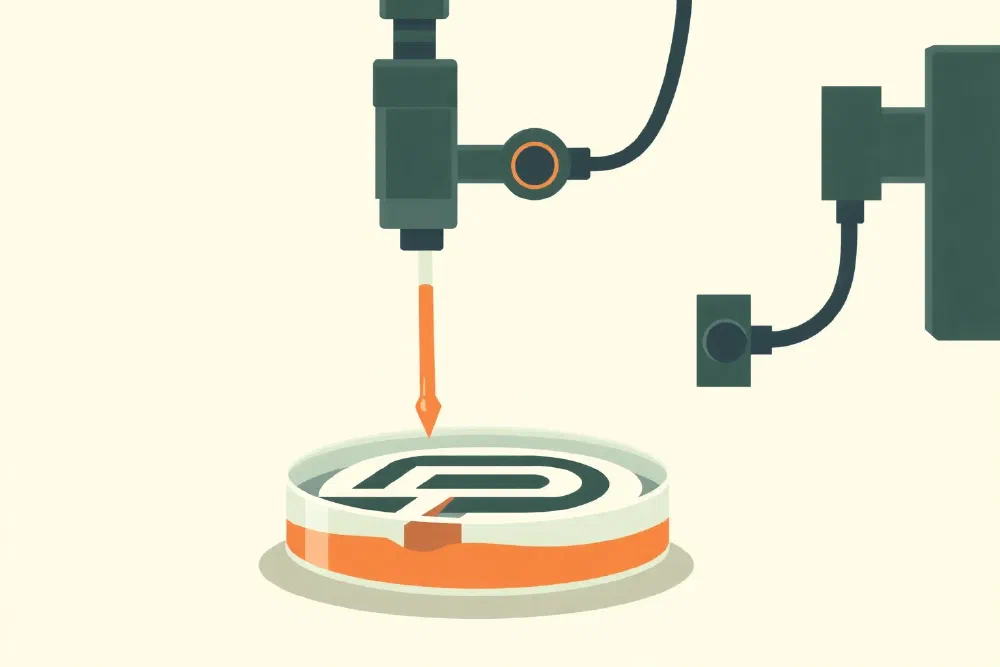
Google Research says it is bringing AI agents to wet-lab benches, and that grounding them in robotics can run closed-loop molecular design cycles that ultimately discover single-digit nanomolar protein binders for cancer targets. That is the pitch. The proof is thinner than the billing. Finding binders in a controlled loop is not the same as proving AI has made real discovery better.
Google also says agents need real experimental readouts because computational models do not capture the full wet-lab picture and cannot replace empirical validation. That sentence does the useful work. It admits the model is not enough. If the agent needs the bench to know whether it is wrong, autonomy should not be the hero of the story.
Google’s aptamer work used protein-binding DNA aptamers over three design-test-iteration cycles, and Google says a complete cycle takes 7, 10 days. Three loops are a demo, not a verdict. Aptamers are a neat sandbox because the readout is fast and rich. The missing part is evidence that this becomes real discovery gains outside that chosen lane.
Google calls its broader plan a long-term research vision, and says frontier models still do not reason reliably about 3-D geometry and physical state. That is not a footnote. It is the problem. The pitch asks us to look at self-improving agents; the useful work is stopping the lab robot from doing the wrong thing.
Google presents VERID as a semantic digital twin that tracks robot geometry, well volumes, reagent identities and pipette tip inventory. This is plumbing. Important plumbing. But plumbing is not proof that AI is now a better scientist.
In a separate Google health post dated October 23, 2026, Google said its TB work moved from an imaging tool to prospective clinical trials, regulatory clearance with local partners and open foundation models like MedGemma. That is what a stronger health-AI claim looks like. It names the slow institutional steps. The lab-agent post wants the glow of biology without the same kind of proof.
Microsoft said Maia 200 is in production and that it will scale Azure Maia to multi-gigawatt deployments starting in 2027. The pattern is plain. The pitch asks for admiration before proof. That is too much story and too little result.